


Garage Gym Flooring: Horse Stall Mats, Rubber Tiles or Rolled Rubber

Daniel Okafor
November 12, 2026

Garage floors are tough, but they are not built for a deadlift landing a few inches away or a dumbbell set down a little too fast. Good gym flooring protects the concrete and your equipment, reduces noise, and gives you a stable, grippy surface to train on. The three common choices are horse stall mats, interlocking rubber tiles and rolled rubber. They differ in cost, looks, smell and how much work they take to install.
What flooring has to do in a home gym
Before comparing products, it helps to be clear about the jobs:
- Protect the slab and equipment: spread the load from dropped or set-down weights so neither the concrete nor the plates chip.
- Give stable footing: firm enough that you do not sink during squats and deadlifts. Soft foam is a poor base for heavy lifting.
- Reduce noise and vibration: important in attached garages and essential in upstairs rooms.
- Stay put: pieces should not slide or curl at the edges.
The thickness that matters most is under heavy work: around 3/4 inch (19 mm) of dense rubber is the common standard for barbell areas. Thinner rubber can be fine for dumbbell and machine work.
Horse stall mats: the budget favourite
Horse stall mats are made for barns. They are usually 4 by 6 feet, about 3/4 inch thick, and made of dense recycled rubber. They are often the cheapest way to cover a large area with thick rubber, and they are sold at farm supply stores.
Strengths:
- Very good value per square foot at full gym thickness.
- Dense and stable under heavy lifts.
- Nearly indestructible.
Drawbacks:
- Heavy. A single mat can weigh around 90–100 lb, so getting them home and in place is a two-person job.
- A strong rubber smell at first. Leaving them outside or in a ventilated garage for a few weeks and washing them with mild soap helps.
- Edges are not always perfectly square, so gaps can appear. Cutting them takes a sharp utility knife, a straight edge and patience.
- One side is often textured. Most people put the smoother side up.
Interlocking rubber tiles: easy to fit and move
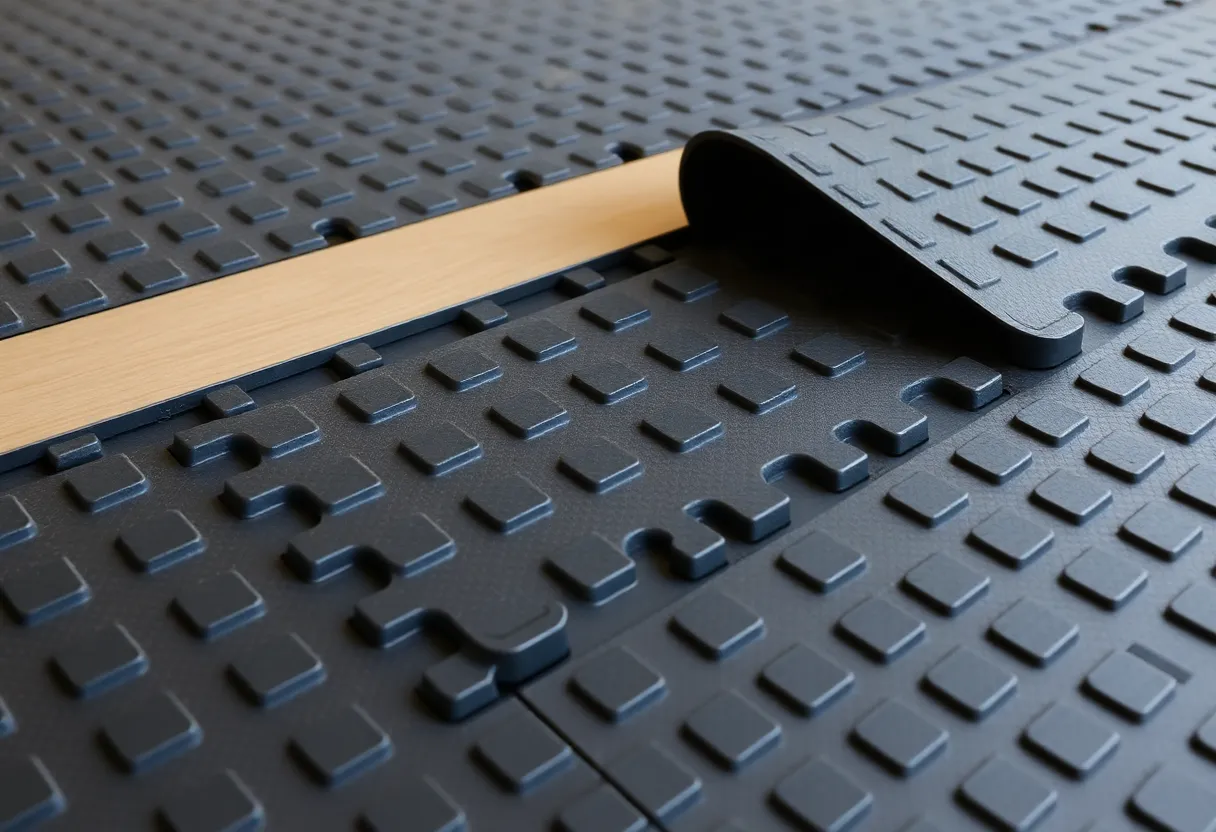
Interlocking tiles are smaller squares, often 2 by 2 feet or 1 by 1 metre, with puzzle edges. Gym-grade versions are dense rubber, not the soft foam used in children’s play mats.
Strengths:
- Light enough for one person to install.
- Puzzle edges keep tiles together without glue.
- Easy to take up when you move house or want to reconfigure.
- Damaged tiles can be replaced individually.
Drawbacks:
- Usually more expensive per square foot than stall mats at the same thickness.
- Seams can shift under heavy lateral movement.
- Edge pieces with straight sides cost extra or need to be cut.
Avoid EVA foam tiles for anything beyond stretching and bodyweight work. They compress under heavy loads, feel unstable for squats and deadlifts, and dents from dumbbells can become permanent.
Rolled rubber: the cleanest look
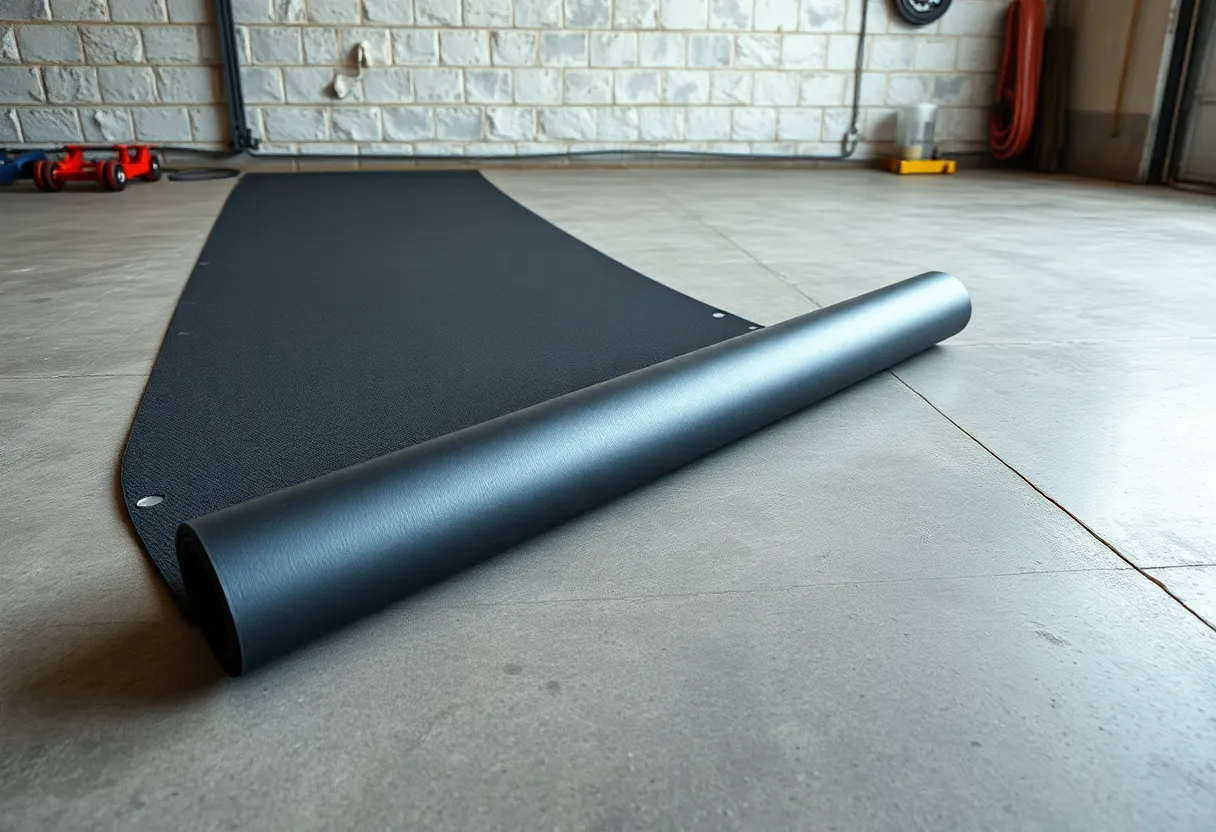
Rolled rubber comes in long rolls, commonly 4 feet wide, in thicknesses from about 1/4 inch to 1/2 inch. Laid out, it gives a near-seamless floor like a commercial gym.
Strengths:
- Very few seams, so it looks tidy and is easy to sweep.
- Fast to install once the rolls are in place.
- Thinner options suit cardio areas and machine zones.
Drawbacks:
- Common thicknesses are thinner than stall mats. For heavy barbell work, add a lifting platform or a stall mat on top in your lifting area.
- Rolls are heavy and awkward to handle.
- Rolled rubber can curl at first. Let it relax flat in a warm space for a day or two before cutting.
Cutting stall mats without losing your mind
Rubber this thick does not cut like carpet. A method that works:
- Mark the line with chalk and clamp or weigh down a long straight edge, such as a level or a length of timber.
- Use a sharp utility knife with fresh blades; change blades often.
- Make a series of shallow passes rather than one deep cut.
- Bend the mat along the cut as you go to open the slit, which makes the next pass easier.
- A little soapy water on the blade reduces drag.
Some people use a jigsaw with a long blade for curves around posts, but a knife gives cleaner straight edges. Wear gloves; the knife slips more easily than you expect.
Upstairs rooms and apartments
Flooring above the ground floor has a bigger job: stopping impact noise travelling through the building. Thick rubber helps, but it does not make heavy drops acceptable in an apartment. For upstairs training:
- Use the thickest rubber you can, and consider two layers in the area where weights come down.
- Avoid dropping weights entirely; lower them under control.
- Put cardio machines on dense rubber or purpose-made isolation pads to reduce vibration.
- Check your lease or building rules, and the floor’s load capacity if you plan heavy equipment such as a full rack.
A lifting platform for heavy deadlifts
If you deadlift heavy or do Olympic lifts, a platform is the best protection for both the floor and your ears. A simple DIY version uses two layers of plywood with stall mat strips on each side where the plates land and a smooth wooden centre to stand on. Some people simply stack two stall mats in the drop zone. Either way, use bumper plates for any lift you might drop.
Thickness guide by activity
- Heavy barbell lifts and dropped weights: 3/4 inch (19 mm) dense rubber or more, ideally with a platform.
- Dumbbell and kettlebell work: 3/8 to 3/4 inch, depending on the weights you use and whether you ever set them down quickly.
- Cardio machines: 1/4 to 3/8 inch is usually enough.
- Bodyweight training and stretching: thin rubber, or a mat on top of any of the above.
Density matters as much as thickness. Soft, spongy rubber feels comfortable underfoot but squashes under a loaded bar, which makes lifts feel unstable. If you can press a thumbnail deep into the material, it is too soft for a lifting area.
Working out what you need
- Measure the area you actually train in, not the whole garage. A 8 by 10 foot zone covers a rack, bench and room to load plates.
- Decide where the heavy work happens. Put the thickest, densest flooring there.
- Choose thinner or cheaper flooring for cardio machines and stretching areas.
- Plan cuts around the rack and the walls before buying, so you buy one extra mat or tile rather than coming up short.
Concrete in garages can be damp. If yours is, let the floor breathe: avoid sealing plastic under rubber, and lift a mat now and then to check for moisture.
Under racks, benches and cardio machines
Different equipment puts different demands on the floor:
- Power racks: put the rack on top of the flooring so the uprights sit on rubber, or cut the flooring around the feet if you plan to bolt the rack to the slab. Follow the rack manufacturer’s guidance on anchoring.
- Benches: any firm flooring works. Make sure bench feet do not sit across a seam, where they can rock.
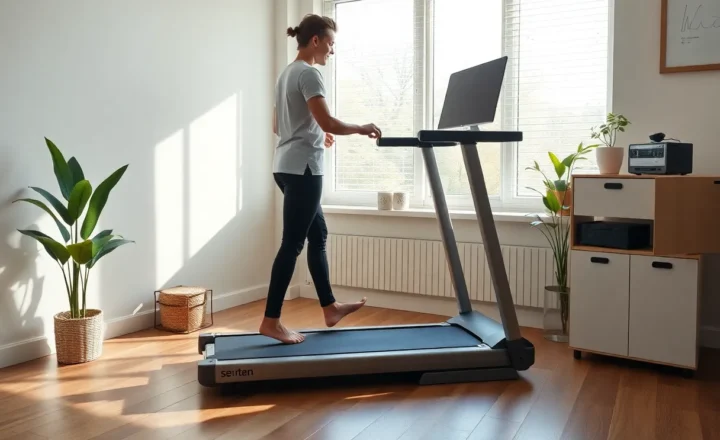
- Treadmills and rowers: thinner rubber or dedicated equipment mats are enough. They mainly stop vibration and protect the floor from feet and oil drips.
- Stretching and mobility areas: a separate yoga or exercise mat on top of the rubber is more comfortable for lying down.
Dealing with the rubber smell
Recycled rubber products often smell strongly when new. The smell fades with time and air. Before bringing mats into a closed room, leave them in a ventilated space for a week or more, wash both sides with water and a mild soap, and let them dry fully. Some people find the smell drops faster in warm weather. If you are sensitive to odours, virgin rubber products usually smell less, though they cost more.
Keeping rubber floors clean
- Sweep or vacuum regularly, since grit acts like sandpaper under weights.
- Mop with water and a mild, pH-neutral cleaner. Avoid oil-based or solvent cleaners, which can break down rubber.
- Do not use the floor as a place to store heavy dumbbells for months. A rack or stand keeps them off the surface. Our guide to adjustable dumbbells covers stands and storage.
Cost versus convenience
For most garage gyms, horse stall mats under the lifting area give the best value. Interlocking rubber tiles cost more but save your back during installation and come with you if you move. Rolled rubber gives the cleanest look and works well as a base layer, with extra thickness added where you lift heavy. Pick based on what you lift, how much floor you need, and how many times you expect to move the gym.