


Adjustable Dumbbells: Dial, Pin and Plate-Loaded Designs Compared

Daniel Okafor
November 12, 2026
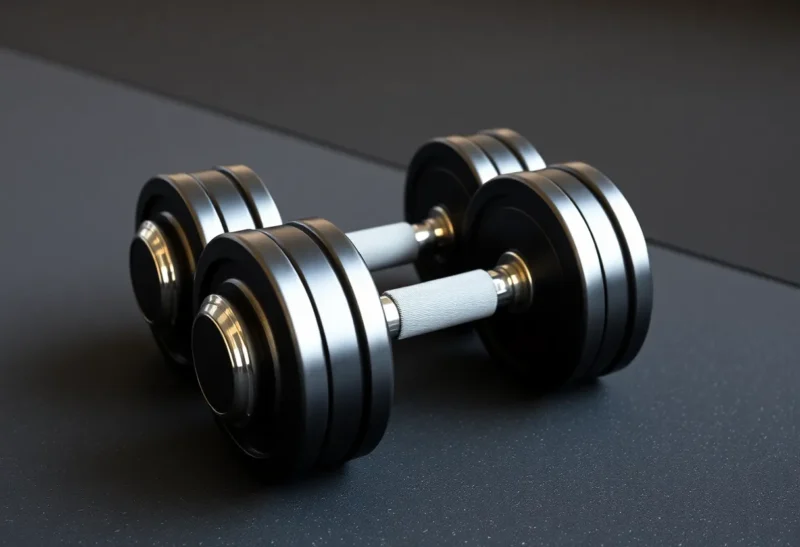
A full rack of fixed dumbbells is the gold standard, and also the reason most home gyms do not have one. A set from light to heavy takes up a wall and costs as much as a used car. Adjustable dumbbells squeeze that range into one pair you can slide under a bench. The catch is that “adjustable” covers several very different mechanisms, and each one trades something: speed, durability, weight range or shape.
This guide groups the main designs and explains what each is good and bad at. Specific models and prices change often, so use the questions at the end to check whatever you are considering.
Dial and selector systems: fastest changes, most moving parts
With dial dumbbells, the plates sit in a cradle. You turn a dial at each end, and a mechanism latches the right number of plates to the handle as you lift it out. Bowflex SelectTech is the best-known example, and many brands now sell similar designs.
What they do well:
- Changes take a few seconds, which suits supersets and circuit training.
- The dials make it obvious what weight you have selected.
- They store neatly in their cradles.
Where they struggle:
- They are long, even at light weights, because the handle carries the full plate stack’s width. That can feel awkward for curls, flyes and lateral raises.
- The plastic parts in the mechanism do not like being dropped. Most manufacturers say not to drop them, which rules out some exercises and habits.
- Weight jumps are fixed by the design, often 2.5 to 5 lb steps, and the maximum is fixed too.
Pin-select blocks: compact and tough
Pin-select dumbbells look like a box of nested weight frames around a handle. You move a pin, or two, to choose how many frames lift with the handle. PowerBlock popularised this design.
Strengths:
- Short and compact at every weight, because the weight is stacked around your hand rather than spread along a long bar.
- Mostly steel, so they tend to survive rough use better than dial systems, though dropping any adjustable dumbbell is a bad idea.
- Some models are expandable: you can buy add-on kits to raise the maximum later.
Weaknesses:
- The square shape takes getting used to and can feel bulky against the forearm during some movements.
- Changing weight takes a little longer than a dial, as you move the pin.
Twist-handle designs: closest to a fixed dumbbell
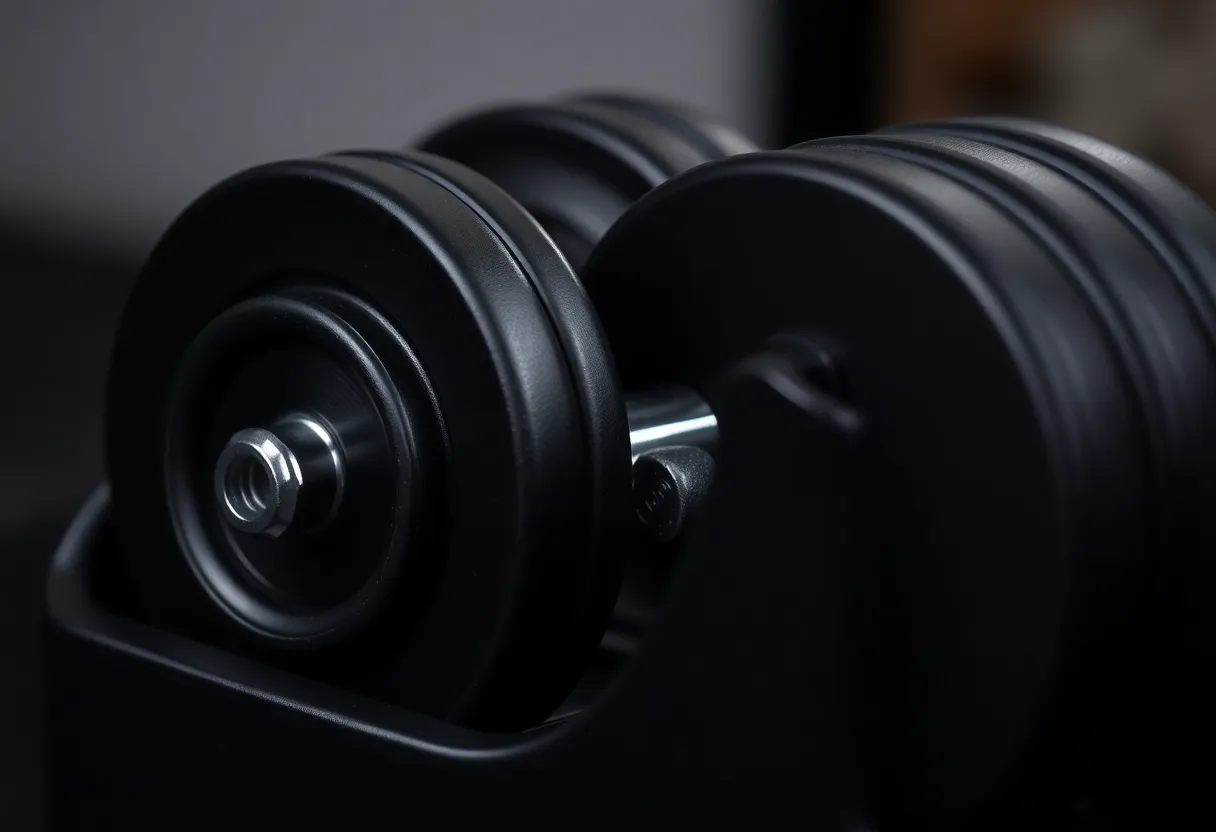
A newer group of designs lets you rotate the handle itself to pick up plates from a cradle. NÜOBELL is a well-known example. The appeal is that the dumbbell looks and feels close to a traditional round dumbbell, with a shape that scales with the weight.
They are generally quick to change and comfortable to hold. As with dial systems, the locking mechanism is the part to look at: check how the plates are secured and what the manufacturer says about drops and warranty.
Plate-loaded handles: cheapest and most durable
The oldest option is a short bar with collars, usually spin-lock or quick-release, that you load with small weight plates. It is cheap, almost indestructible, and you can add plates for years.
The trade-off is time. Changing weight means removing collars and swapping plates on both dumbbells, which takes a minute or more. For a program where you do the same weight for several sets, that is fine. For circuits and drop sets, it is a chore. Spin-lock collars can also loosen during a set if they are not tight, so check them often.
If you already own a barbell and plates, standard or Olympic plate-loaded dumbbell handles let you share plates between the two.
Matching the design to how you train
The mechanism matters most for the way you move between exercises. If your sessions are straight sets, three or four sets of one exercise before moving to the next, slow weight changes barely matter, and durability and price become the priorities. If you like circuits, supersets or drop sets, the seconds spent changing weight add up quickly, and a fast dial or twist mechanism earns its higher price. Households where two people of different strength train together also benefit from fast changes, since the weight changes between every set.
Think too about who else will use them. Children and guests tend to drop things; the more robust designs forgive that better.
How heavy should the set go?
Buy for the strength you expect to have in a year, not today. Some useful reference points:
- A set that tops out around 50 lb per hand covers most upper-body work for many beginners, and lunges and split squats for some time.
- Stronger lifters will outgrow 50 lb quickly for rows, goblet squats and Romanian deadlifts. A maximum of 70–90 lb per hand lasts much longer.
- For lower-body strength, dumbbells eventually become limited by grip and by how hard it is to get heavy weights into position. That is where a barbell or kettlebells start to make sense.
The smallest step also matters. Moving from 20 to 25 lb for a lateral raise is a 25 percent jump. Sets with 2.5 lb steps at the light end make steady progress much easier, which is the core of any beginner strength program.
Exercises where dumbbells beat a barbell
Dumbbells are not just a space-saving barbell. They do some jobs better:
- One-sided work: single-arm rows, split squats and single-leg Romanian deadlifts expose and correct strength differences between sides.
- Natural pressing paths: your hands can rotate during presses, which many people find easier on the shoulders than a fixed bar.
- Accessory movements: lateral raises, curls, flyes and rear-delt raises are hard to do any other way at home.
- Carries: farmer’s carries build grip and trunk strength with almost no learning curve.
The limit is heavy lower-body work. A pair of 50 lb dumbbells is 100 lb total in a goblet or front-loaded position, which strong legs quickly outgrow.
Buying second-hand
Used adjustable dumbbells are widely available, often from people who bought them with good intentions. They can be good value, but check:
- Every setting locks securely. Lift each one at every weight over something soft and shake gently.
- No cracked plastic on dial mechanisms or bent plates on pin systems.
- The cradle or stand is included, since some designs cannot be adjusted without it.
- Spin-lock collars thread smoothly on plate-loaded handles.
Warranties usually do not transfer to second owners, so price that in.
Space, floor and storage
- Most adjustable sets need a stand or the cradle on a bench or the floor. A dedicated stand brings them to a comfortable height and protects your back when picking them up.
- Protect the floor. Even if you never drop them, setting heavy dumbbells down on a hard floor will mark it. See our guide to garage gym flooring for options.
- Measure the length of the dial models at their maximum and check you have room to press overhead without hitting a lamp or ceiling.
Dumbbells or kettlebells for a small space?
Kettlebells are the other common choice for compact home gyms. Their offset handle makes them excellent for swings, cleans, snatches and goblet squats, and they are comfortable to carry. They are less suited to pressing on a bench and to most isolation exercises. Fixed kettlebells also come in larger jumps, often 4 kg (about 8–9 lb), which makes steady progression on presses tricky. Adjustable kettlebells exist, with similar trade-offs to adjustable dumbbells.
For most people starting a home gym, adjustable dumbbells cover more exercises. A single kettlebell is a good second purchase if you enjoy swings and conditioning work.
The bench matters as much as the dumbbells
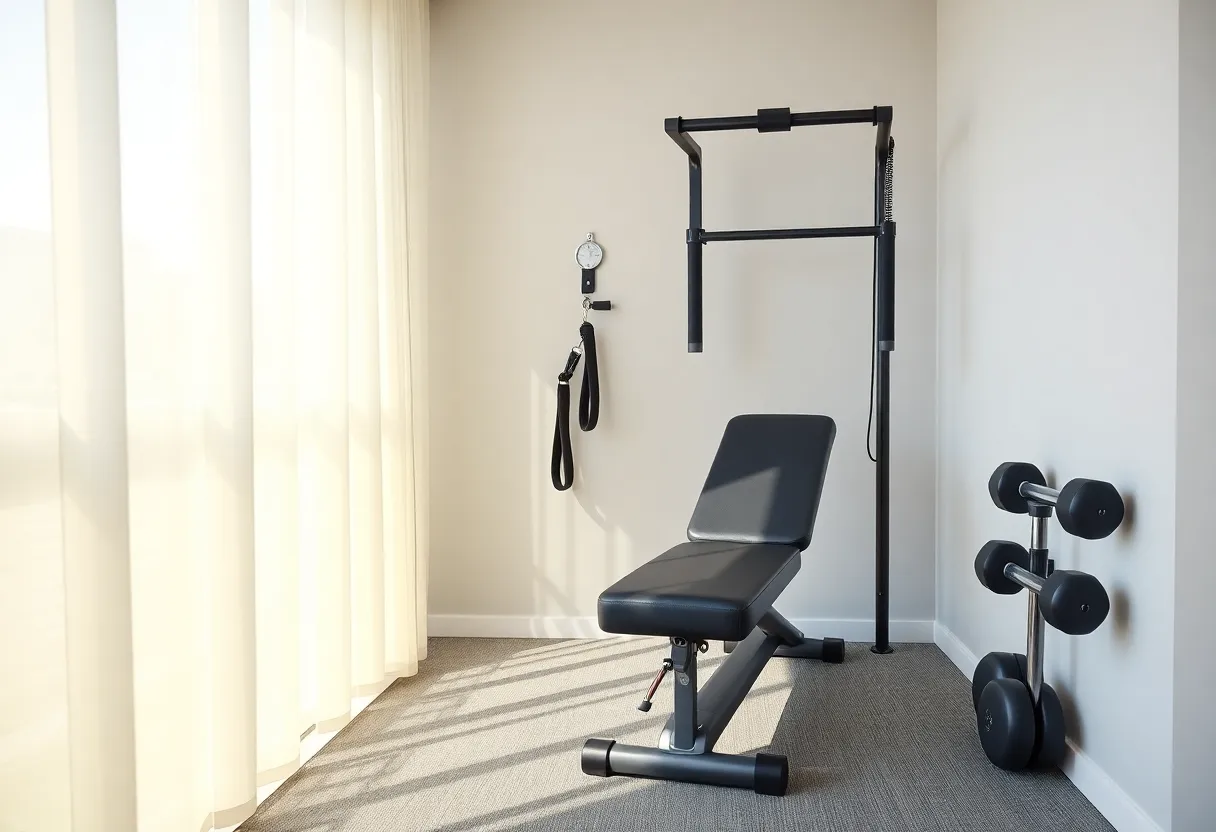
Many of the best dumbbell exercises need a bench: presses, rows, step-ups and split squats. A flat bench is enough to start. An adjustable bench adds incline pressing and supported rows. Check the bench’s weight rating includes you plus the heaviest dumbbells, that it does not wobble, and that the seat-to-back gap is small enough to be comfortable when inclined. A bench that folds or stands upright is useful in small rooms.
Questions to ask about any set
- What is the weight range and the smallest step at the light end?
- How long is the dumbbell at its lightest and heaviest setting?
- What does the warranty cover, and what does it say about dropping?
- Are spare parts or expansion kits available?
- How quickly can I change weight, and does that match the way I train?
- Will it fit my hands? Handle thickness and knurling vary.
If you mostly train with steady sets and want something that lasts decades, a plate-loaded pair or pin-select blocks are hard to beat. If you love fast circuits and supersets in a small apartment, a dial or twist-handle set is worth the extra care it needs.